

7 Modern Work Spaces That Inspire Productivity in 2026
Imagine stepping into a workplace in 2026 where every detail is designed for peak performance. The future of work is being shaped by environments that do more than shelter employees—they actively drive productivity, spark creativity, and support well-being.
This article explores how modern work spaces are evolving to meet the needs of a dynamic workforce. Whether you are a business owner, designer, or professional, you will discover the most innovative concepts redefining the office.
We will introduce seven modern work spaces, each with distinct benefits and forward-thinking features. Curious how these environments can elevate your team? Read on to find the top spaces inspiring productivity in the year ahead.
The Evolution of Modern Work Spaces
The concept of modern work spaces has undergone a dramatic transformation in recent years. No longer defined by rows of cubicles, companies are embracing environments that foster adaptability, collaboration, and well-being. This evolution is shaped by a blend of cultural shifts, technological innovation, and a renewed focus on employee needs.
Shifting Trends in Workplace Design
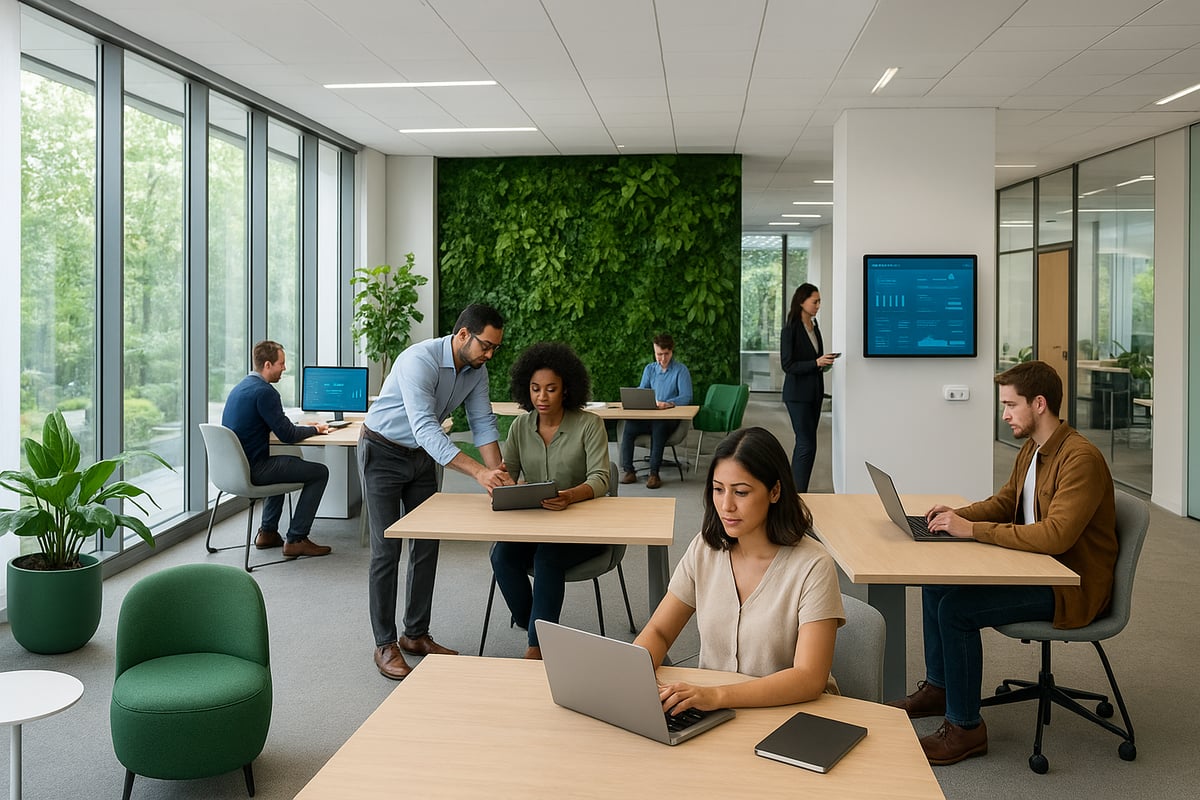
Modern work spaces have shifted away from traditional layouts, with open and flexible environments now taking center stage. The rise of hybrid and remote work models post-pandemic has pushed organizations to rethink how space is used. Employees expect areas that support both collaboration and focused tasks, while well-being and inclusivity are no longer optional.
Designers are integrating technology and sustainability throughout these environments. For example, Steelcase research highlights how monotonous layouts increase the demand for variety and movement. According to Studio DB, collaborative environments can boost productivity by up to 50 percent. To dive deeper into this shift, see the latest Hybrid workspace design trends shaping the future of modern work spaces.
Key Drivers of Productivity in 2026 Workspaces
The effectiveness of modern work spaces in 2026 relies on optimizing acoustics, lighting, and ergonomic furniture. Biophilic design—bringing nature indoors—helps reduce stress and spark creativity. Modularity is essential, allowing teams to quickly adapt their environment as needs change.
Hospitality-inspired features, such as comfortable lounges and refreshment stations, make offices more inviting. Gallup data shows that engaged teams in modern work spaces experience 17 percent higher productivity. Flexible furniture supports hybrid schedules, making the workplace a dynamic asset.
The Role of Technology and Sustainability
Smart office systems are now standard features of modern work spaces. These include digital wayfinding, occupancy sensors, and advanced climate control for seamless collaboration and efficiency. Sustainable materials and modular construction methods are prioritized to minimize environmental impact.
Offices are leveraging IoT technology to manage space and energy use efficiently. Energy-efficient lighting and climate systems are not just trends, but core expectations according to Studio DB. These advances help modern work spaces stay future-ready and environmentally responsible.
Designing for Diversity, Equity, and Inclusion
Modern work spaces increasingly address the diverse needs of employees. This includes quiet retreat rooms for neurodiverse staff, adjustable lighting, and accessible layouts for all abilities. Providing a variety of settings supports different work styles and fosters a sense of belonging.
Inclusive branding and cultural representation are woven throughout the design. For instance, retreat rooms are often placed away from busy office areas to create calm zones. Strong workplace branding in modern work spaces can reduce staff turnover by 28 percent, demonstrating the value of DEI in workspace planning.
7 Modern Work Spaces That Inspire Productivity in 2026
The landscape of modern work spaces is evolving at an unprecedented pace. In 2026, the most successful environments are those that inspire creativity, foster collaboration, and prioritize well-being. Each of the seven work space concepts below redefines what it means to be productive, blending the best of design, technology, and human-centric thinking.
1. Biophilic Workspaces: Nature-Infused Productivity
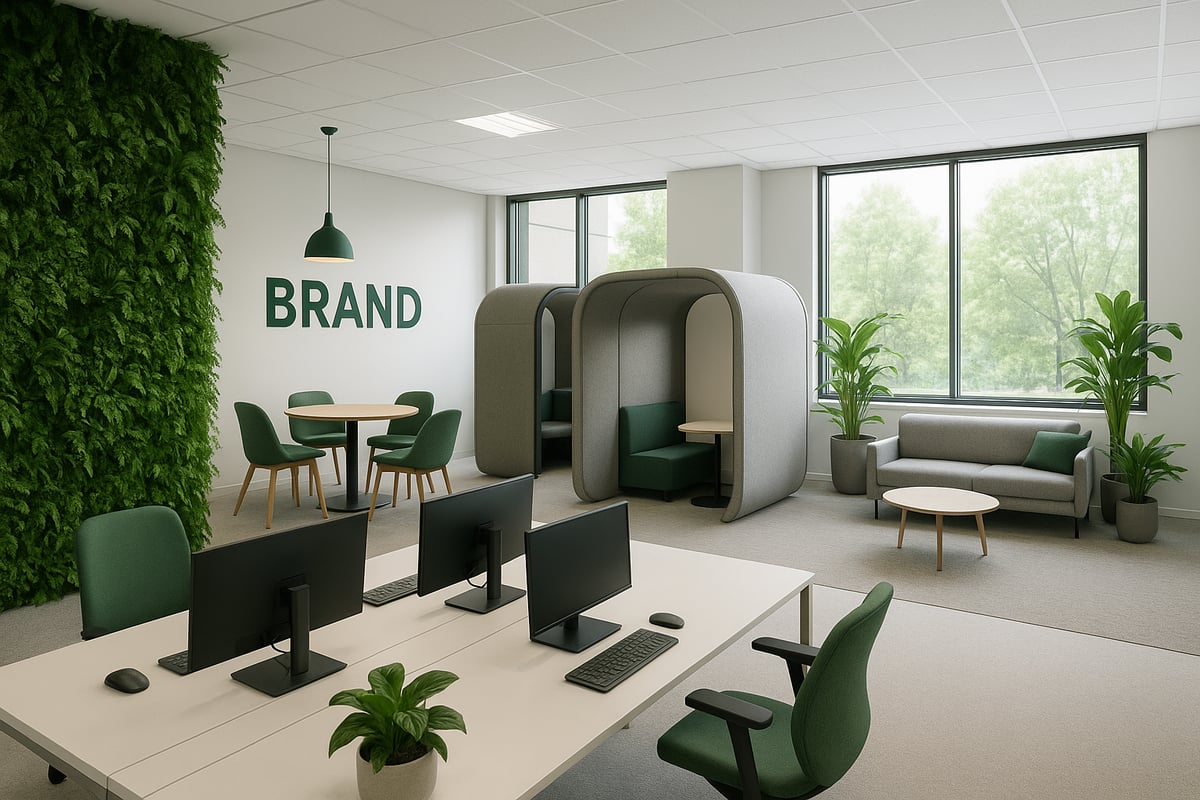
Biophilic design is transforming modern work spaces by integrating the restorative powers of nature directly into the office. These environments feature living walls, abundant indoor plants, flowing water features, and natural materials that bring the outdoors inside.
Employees in biophilic workspaces report significantly lower stress levels and improved focus. Natural light floods these areas, reducing reliance on artificial lighting and supporting circadian rhythms. Adaptable layouts encourage movement, allowing staff to choose between sun-soaked nooks or shaded, plant-lined corners for different tasks.
Companies leveraging biophilic design often see a measurable boost in creativity and job satisfaction. Studio DB’s projects, for example, use greenery and organic textures to create calm, inviting atmospheres that counteract digital fatigue. This reconnection with nature is not just aesthetic; it is a strategic response to the overstimulation of digital work.
Research highlights a direct link between biophilic elements and reduced absenteeism. Employees feel more engaged and less likely to experience burnout when surrounded by natural beauty. Such modern work spaces are especially effective for roles demanding innovation and focus.
Key features of biophilic workspaces include:
- Living green walls and potted plants
- Ample daylight and views of the outdoors
- Natural wood, stone, and water features
- Flexible seating arrangements
- Quiet zones immersed in greenery
By infusing nature into the heart of the office, these modern work spaces nurture both mind and body, setting a new benchmark for productivity and well-being in 2026.
2. Agile & Modular Offices: Spaces That Adapt to You
Agile and modular offices epitomize flexibility in modern work spaces. These environments are designed to evolve as teams and projects shift, using reconfigurable layouts and adaptable furniture to support a dynamic workday.
Modular desks, moveable partitions, and adjustable meeting zones allow companies to optimize space for collaboration or focused work as needed. For instance, the Omada co-working space features business lounges and private pods, catering to both group brainstorming sessions and individual concentration.
The hallmark of agile offices is their ability to support hybrid teams. Employees can seamlessly transition between in-person and remote collaboration, thanks to workstations that can be easily rearranged or expanded. This adaptability is crucial for fast-growing companies and project-based teams that require frequent reorganization.
Research shows that agile design not only enhances collaboration but also improves staff retention and engagement. Employees appreciate having control over their environment, which leads to higher satisfaction and productivity. According to recent surveys, flexible layouts are increasingly recognized as vital for profitability and organizational culture in modern work spaces.
Key elements of agile offices:
- Modular, mobile furniture
- Flexible meeting and breakout areas
- Technology integration for hybrid work
- Storage solutions that move with teams
- Support for both collaborative and solo tasks
Ultimately, agile and modular modern work spaces empower organizations to respond quickly to change, fostering a culture of innovation and resilience.
3. Acoustic Meeting Pods & Private Focus Zones
As open-plan designs dominate modern work spaces, the need for privacy and focus has never been greater. Acoustic meeting pods and private zones offer a practical solution, providing soundproof environments for confidential discussions, deep work, and virtual meetings.
These pods are modular and customizable, fitting seamlessly into any office layout. They can be quickly installed or relocated, making them ideal for businesses with evolving spatial needs. Features like acoustic insulation, adjustable lighting, and integrated power outlets ensure both comfort and functionality.
A key benefit of acoustic pods is their ability to minimize distractions. Employees can escape the ambient noise of open offices, boosting concentration and productivity. This is particularly valuable for industries handling sensitive information or frequent video calls.
Organizations are increasingly turning to meeting pods to create on-demand spaces for focused work. For a deeper dive into their advantages, explore the Benefits of office meeting pods, which highlights how these solutions enhance productivity and privacy in modern work spaces.
Use cases for acoustic pods include:
- Private meetings and interviews
- Confidential client discussions
- Quiet zones for deep concentration
- Hybrid meetings with remote participants
By integrating acoustic meeting pods, modern work spaces can offer the perfect balance between openness and privacy, supporting diverse work styles across all industries.
4. Hospitality-Led Workspaces: The ‘Hotelification’ of the Office
Hospitality-led workspaces are redefining the employee experience by infusing modern work spaces with the comfort and amenities of boutique hotels. This approach centers on creating inviting, luxurious environments that foster both productivity and relaxation.
Key features include welcome lounges, premium coffee bars, event-ready boardrooms, and plush soft seating. These elements not only impress clients but also encourage social interaction among employees. Studio DB’s social hubs and branded reception areas exemplify how hospitality-driven design can transform the traditional office.
The hotelification trend blurs the line between work and leisure, supporting employee well-being and community building. Staff are more likely to collaborate in spaces that feel less like a conventional office and more like a vibrant gathering place. This environment attracts top talent and supports hybrid teams needing both formal and informal settings.
Hospitality-led modern work spaces are especially beneficial for creative agencies and client-facing businesses. They provide flexible zones for networking, brainstorming, or unwinding, all within a cohesive, branded setting.
Notable benefits include:
- Enhanced employee satisfaction and retention
- Improved recruitment outcomes
- Greater sense of belonging and community
- Flexible spaces for work, meetings, and events
By adopting hospitality principles, modern work spaces become destinations that inspire loyalty, creativity, and exceptional performance.
5. Multi-Functional Social Hubs: Collaboration Meets Community
Multi-functional social hubs are at the heart of modern work spaces that value both collaboration and community. These central areas are designed for everything from informal meetings and brainstorming sessions to large company events.
Social hubs feature adaptable seating arrangements, integrated technology for presentations, and event-friendly layouts. For example, Internet NZ’s dual-level office includes zones for public interaction as well as private work, demonstrating the versatility of such spaces.
The primary advantage of social hubs is their ability to foster spontaneous collaboration and cross-team interaction. Employees from different departments can connect, share ideas, and build relationships outside of formal meetings. This environment nurtures a strong company culture and supports knowledge sharing.
Engagement is a key metric in these modern work spaces. Research from Gallup indicates that engaged teams are significantly more profitable, underlining the business value of investing in social hubs.
Typical features include:
- Flexible, comfortable seating
- Easy access to presentation technology
- Spaces configurable for events or casual gatherings
- Zones for both quiet work and lively interaction
Organizations that prioritize multi-functional social hubs create modern work spaces where innovation, culture, and productivity thrive together.
6. Branded & Experiential Offices: Spaces That Tell Your Story
Branded and experiential offices go beyond aesthetics, turning modern work spaces into immersive environments that reflect company identity and values. Every element, from signage to color schemes, is thoughtfully curated to reinforce the brand story.
Such offices often feature custom artwork, themed meeting rooms, and interactive storytelling displays. Neon signs and subtle design accents immerse employees and visitors alike in the company’s culture, fostering a sense of pride and unity.
The benefits of branded spaces are multifaceted. They help attract top talent, reduce recruitment costs, and build loyalty among existing employees. A strong visual identity also enhances client perception, making a lasting impression during visits or virtual meetings.
These modern work spaces are particularly valuable for start-ups, creative firms, and organizations seeking to differentiate themselves in competitive markets. By investing in experiential design, companies signal their commitment to innovation and employee engagement.
Key components of branded offices:
- Custom signage and graphics
- Brand-aligned color palettes and materials
- Themed collaboration zones
- Storytelling through interior design
In 2026, branded and experiential modern work spaces are essential for organizations aiming to stand out and foster a high-performance culture.
7. Tech-Integrated & Smart Workspaces: The Connected Office
Tech-integrated and smart offices represent the future of modern work spaces. These environments leverage advanced technology to enable seamless collaboration, efficient workflows, and a superior employee experience.
Smart workspaces include features like video conferencing suites, occupancy sensors, digital wayfinding, and wireless charging stations. Offices can use IoT devices to manage space utilization, automate climate control, and streamline room bookings. This connectivity supports hybrid work and distributed teams by ensuring that every employee, whether on-site or remote, has access to the tools they need.
Digital-first modern work spaces report higher employee satisfaction and efficiency. Automated systems reduce administrative burdens, freeing staff to focus on high-value tasks. Real-time data from smart sensors informs decisions about layout adjustments and resource allocation.
Key features of tech-integrated offices:
- High-speed, secure connectivity
- Seamless integration with remote collaboration tools
- Automated building management systems
- User-friendly digital signage and wayfinding
For tech companies, global organizations, and any business prioritizing innovation, tech-integrated modern work spaces are not just a trend—they are a competitive necessity. By embracing smart solutions, companies future-proof their environments for ongoing growth and change.
Integrating Modular Meeting Pods for Productivity & Privacy
In today's modern work spaces, open-plan layouts have created both opportunities and challenges for productivity. While collaboration thrives, constant noise and distractions can undermine focus. Modular meeting pods have emerged as a smart solution, providing dedicated zones for privacy and concentration within modern work spaces.
Key Features and Benefits
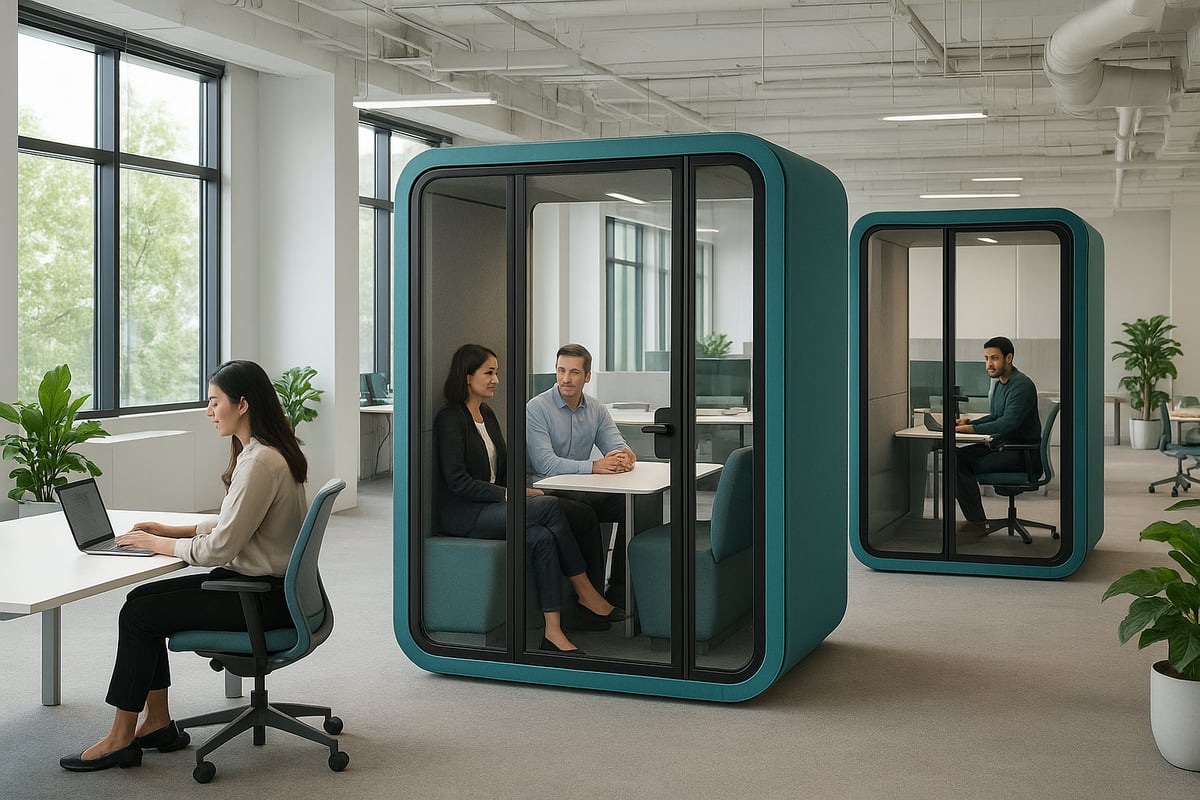
Modular meeting pods are designed to address the evolving needs of modern work spaces. These pods offer:
- Superior acoustic insulation for confidential meetings and deep work.
- Rapid installation without major renovations, minimizing disruption.
- Customizable layouts to fit various team sizes and purposes.
- Mobility and flexibility, allowing easy relocation as office needs change.
By integrating advanced materials and design, pods help companies control noise and boost concentration. For more technical insights on how soundproofing enhances office environments, see Soundproofing for modern offices.
Pods not only support hybrid and remote work but also create a comfortable environment for sensitive conversations. Employees gain access to quiet zones for video calls, focused tasks, or confidential discussions, which is increasingly essential in dynamic modern work spaces.
Use Cases, Sustainability, and Market Perspective
The versatility of modular meeting pods makes them suitable for a wide range of modern work spaces, including:
- Corporate offices seeking private areas for leadership meetings.
- Serviced workspaces and coworking hubs needing on-demand focus zones.
- Event venues requiring temporary, flexible breakout rooms.
- Organizations undergoing office reconfigurations.
Sustainability is another key advantage. Pods are reusable and relocatable, supporting green initiatives while reducing construction waste. This adaptability aligns with the broader trend of modular workspaces support adaptability in office design, where companies need to scale and reconfigure spaces quickly.
As demand for privacy and flexibility grows, modular meeting pods are becoming a staple in modern work spaces. They offer a cost-effective alternative to permanent meeting rooms, with lower maintenance and dilapidation costs. By investing in these adaptable solutions, organizations ensure their work environments remain productive, private, and future-ready.
Designing for Well-Being, Diversity, and Future Growth
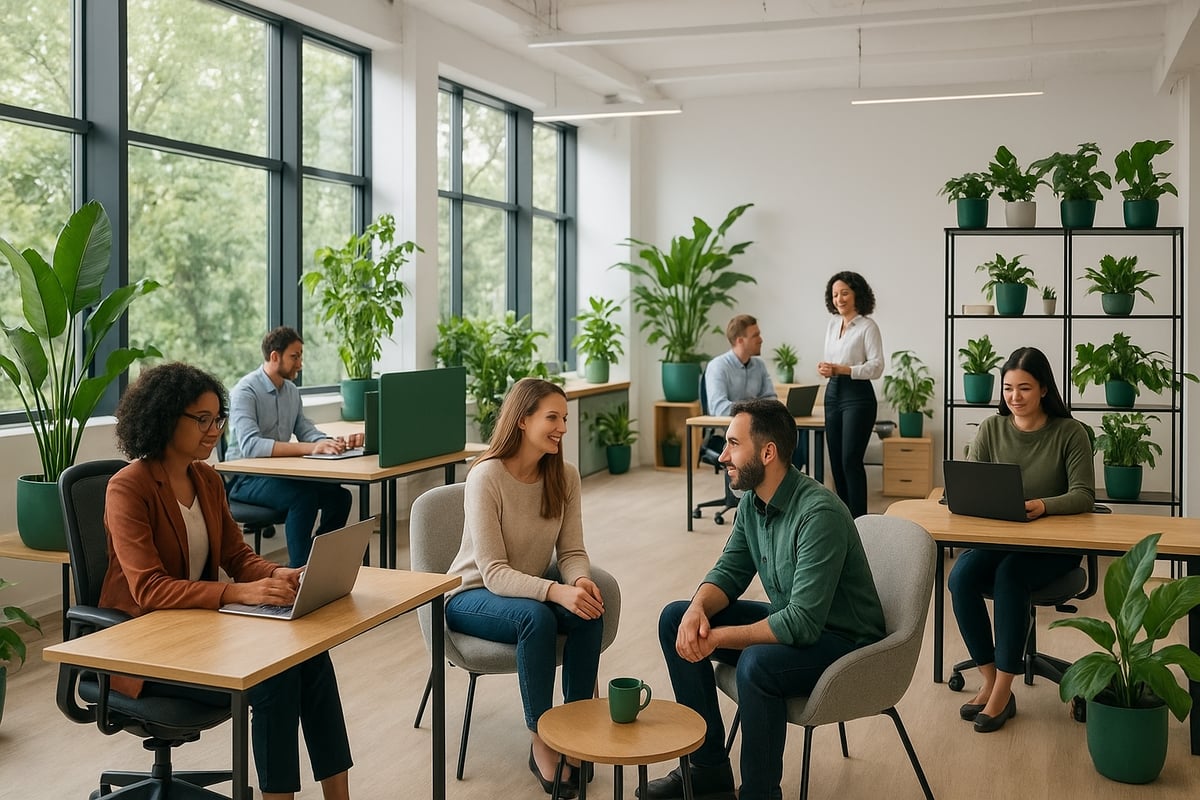
Creating modern work spaces that truly inspire productivity requires a holistic approach. Environments must prioritize employee well-being, foster inclusivity, and be ready to adapt as teams change and businesses grow. These principles ensure that modern work spaces remain both effective and inspiring as the future of work evolves.
Prioritizing Employee Well-Being
Employee well-being sits at the heart of modern work spaces. Comfortable, ergonomic furniture, generous natural light, and high air quality all contribute to a healthier, more productive environment. Dedicated quiet zones and retreat rooms provide essential spaces for mental recharge.
Modern work spaces that include wellness amenities, such as nap pods or relaxation areas, help reduce absenteeism. Research confirms that biophilic design enhances employee well-being by reducing stress and supporting engagement. When well-being is prioritized, organizations see higher retention and a stronger sense of workplace satisfaction.
Creating Inclusive and Accessible Work Environments
Modern work spaces must be accessible and inclusive for everyone. This means providing features like adjustable lighting, barrier-free layouts, and adaptive furniture to support neurodiverse and physically diverse team members.
Sensory rooms and acoustic privacy zones address a range of needs and working styles. Culturally inclusive branding and design elements foster a sense of belonging. Offices that invest in inclusive design attract a wider talent pool and help every employee feel valued in their daily work.
Planning for Scalability and Future-Proofing
Scalability is vital for modern work spaces aiming to support growth. Modular construction, moveable walls, and flexible layouts allow companies to reconfigure spaces as needed. Integrating emerging technologies, such as AI and IoT, ensures that offices remain up to date with evolving business needs.
Sustainable materials and circular design principles reduce environmental impact and future-proof investments. According to a recent survey, flexible workspaces boost profitability and culture, making adaptability a core advantage for forward-thinking organizations.
Measuring and Optimizing Workspace Performance
To keep modern work spaces aligned with business goals, ongoing measurement is essential. Analytics tools track how spaces are used, while employee feedback highlights what works and what needs improvement.
Smart sensors can provide real-time occupancy data, helping to optimize layouts and amenities. Regular updates based on this data ensure that the workspace evolves with the organization’s changing needs. Data-driven approaches lead to higher ROI and better employee experiences in modern work spaces.
As we’ve explored, the most inspiring workspaces of 2026 are all about adaptability, privacy, and supporting your team’s best work. If you’re ready to bring deeper focus and confidentiality into your office—without a disruptive renovation—modular meeting pods could be the answer. These soundproof, flexible spaces help you create productive zones for individuals and teams within any open plan environment. Whether you’re planning for growth, supporting hybrid work, or simply want to foster more meaningful collaboration, it’s worth seeing how the right solution can elevate your workspace.
Browse our selection of new pods
and discover how modern design can drive your business forward.